
Inhabiting the Whole Mansion
Why we live smaller than we are
I’ve been thinking about human capacity as a mansion.
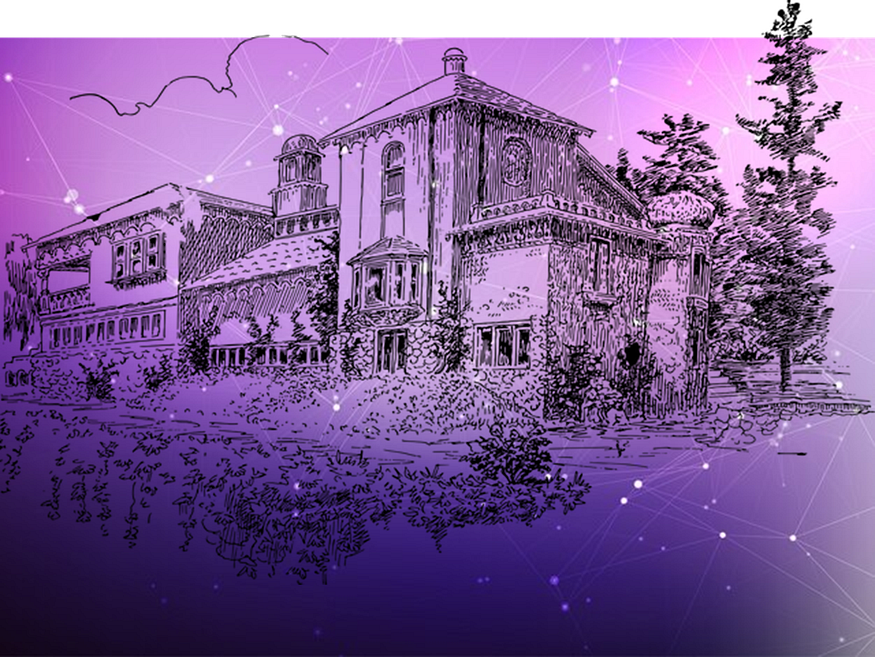
As I was looking at one, I exclaimed how large it genuinely was — so many floors, unexpected staircases, a wealth of furniture, rooms that smelled of old wood and rooms that smelled of nothing. Then I also wondered: how do they maintain it? How do they make use of it? There are so many corridors; won’t we get lost? Are all rooms actually used?
Our human capacities are as huge, probably larger, and hard to manage too — not just metaphorically; really. What lives in the uninhabited rooms aren’t strange or exotic, but they might feel so. It’s easy to get lost.
The rooms can be our capacities to perform, produce, or create. To care deeply without losing ourselves. To think strategically without becoming rigid. To rest without guilt. To push back without burning everything down. To sit with a question that doesn’t have an answer yet. To be, occasionally, a little unserious.
Most of us are strong in some of these and have barely visited others. We might be extremely familiar with some corridors, while others we may not have been walked in years. Some doors we might pass by quickly, eyes ahead, without quite deciding to. Very often, we don’t even recognise that we have forgotten our routes to some of these.
The mansion is larger than you probably think.
But here is what’s strange: almost none of us live in most of it.
The architecture of our own houses
Before we go further, though, let’s look at the actual apartments we live in.
Some of us live in older houses, like me. The architecture is from a previous century — beautiful in theory, badly organised in practice. Old furnitures I swear at every morning and use like my best friends by evening. Rooms I close off because I can’t be bothered. Then I open them, and my pets investigate like it’s a strange new world they need to mark territory in immediately.
Others of us live in newer apartments. Smaller, more efficient. Every inch used. Surfaces clean. But a guest arrives and there’s suddenly no space. The breathing space was never really there — it had been optimised away. But …
What happens if the rooms we’ve settled into become so comfortable we can’t imagine living any other way, even briefly? What happens if the other rooms start to feel so strange we’re almost scared to enter them?
What closed rooms look like, and why we close rooms and capacities off
I once knew an activist who decided to take it easy — and promptly became a relaxation activist instead. She scheduled the rest and planned for stillness, but couldn’t quite stop fighting even when the fight was with herself.
Or think of someone who finally takes that long holiday — genuinely needs and wants it. But quickly, we find them answering emails. Not because work is urgent, but because the room called rest has been closed so long it no longer feels inhabitable. The chance to relax arrived, but they couldn’t access that.
That’s how closed rooms look like — nothing dramatic, very ordinary.
We close rooms for reasons. Some hold feelings we don’t know how to carry. Some require capacities no one modelled — and we were supposed to just know. Some threaten the identities that once kept us safe: the capable one, the steady one, or the one who doesn’t need much. Some rooms are simply too slow for lives that were trained, rewarded, and occasionally celebrated for being fast.
So we adapt. We close a few doors. We figure out what works and stay there. This is actually intelligence — practical, efficient, but slightly tragic only in retrospect.
We didn’t plan to close them permanently. It just happened. The room became unfamiliar, then effortful, then slightly unreal.
And here’s the thing: we were fine. Actually fine. We improved, became sharper, more skilled, better within our range. There was no emergency. Nobody awards points for exploring your own mansion when the rooms you’re already in are working.
This is how almost everyone lives, almost all of the time. Not tragically. Mostly reasonably. With a faint sense that there might be more — which we file away for later.
And we do this together. Whole families, teams, cultures settle into a few rooms collectively, and call that floor plan reality.
What’s happening inside our actual systems
The mansion isn’t just a metaphor, but shows how our systems actually work. Every capacity we develop — and every one we stop using — has an actual architecture in the brain.
Neural pathways, strengthened by use, becomes automatic through repetition. The rooms we live in most become effortless: available without thought, familiar the way a well-worn path is familiar even in the dark. The ones we stop visiting don’t vanish, but grow quieter. The light switch may still be there; but our hands stop reaching there by instinct. Something easy might feel so effortful that it feels undoable and impossible. I’m just not someone who can do that anymore. Maybe you never were, the mind suggests, helpfully. (For others, every room might feel slightly scary and difficult to consistently inhabit. We will discuss more on that in another article.)
At one point, rooms become wings — an entire part of the house, entire sets of capacities. Closing a door is one thing. Forgetting we own the wing is something else entirely. That’s not just lost access to a capacity — that’s a smaller version of ourselves that has quietly become the only version we can picture.
What happens when those pathways reconnect — when the rooms start talking to each other again — is a different story. But it begins with knowing the wing is still there — and that knowing, even faint, is already a kind of movement.
Why should we care
The floor plan we’ve settled into doesn’t usually announce when it’s stopped working.
We’ve built something real — a career, a relationship, a body of work, a steady self. For a long time, it works. The strengths that got us here keep getting us further. We trust them. We rely on them. We become known for them. Then, quietly, without much announcement, something that should be possible stops happening. Not because we haven’t tried. Because the trying keeps coming from the same room — and the room has reached its edge.
And here’s what that edge actually means: the next thing we need is in a different room.
The person who has lived in strategy and analysis hits a wall in a relationship that needs presence, not solutions. The room they haven’t visited — the one that can simply sit with another person without fixing anything — has exactly what’s missing. The person who has given and cared and held others together for years finds they have nothing left — because the room where they are allowed to receive, to need, to be held, has been locked so long they’ve stopped believing it belongs to them. The person whose conviction and rebellion built something meaningful finds they cannot hear critique anymore — and the room that holds curiosity, openness, the willingness to be wrong, has gone silent.
None of these are character failures. They are rooms that haven’t been visited in a while. The capacity isn’t gone. The pathway is overgrown.
And this is true collectively, not just personally. Entire organisations run on analysis without intuition, care without boundaries, certainty without curiosity. When a team hits a crisis that their usual rooms cannot solve, they don’t know which door to open. Whole cultures legislate from conviction without ever entering the room that asks: what am I missing here?
Sometimes the signal arrives loudly — loss, a new role, a transition, sometimes even something that looks like success but lands hollow. We try to process it from where we are. It doesn’t quite fit. Something stays undigested.
And sometimes there’s no crisis at all. Just a quiet knowing that there is more of us available than we’ve been living. Not restlessness. The mansion reminding us it’s still there.
We’ll know our version.
Imagining a red carpet moment while entering
So, how do we actually enter the rooms?
Calm, photogenic, like a pro, on top of the world—that’s how we sometimes like to enter rooms or capacities that we haven’t explored in a long time (atleast I do). Like walking a red carpet, with all the right cues.
Rooms don’t work that way.
You stand at the threshold and feel something vague — tiredness, dread, a voice that says not today, maybe when things settle. But things rarely settle. You enter, you panic a little, you leave. You come back. You sit on the floor because you forgot there’s a chair.
The room might be colder than you expected. You might not know what you’re looking at. You might feel foolish for having avoided something that turns out to be just a room. Some days you do nothing useful. Some days you move one thing from one corner to another and that’s somehow the whole work. Capacity often returns before confidence does.
Or — and this is more common — you open it and it’s worse than the hallway. Old feelings that didn’t wait patiently. Things you’d half-processed that now need more attention than you have today. You close the door again. You feel like you failed.
Small changes don’t look like progress. Sometimes they look like going backward. But the door that was once frightening is now just a door we’ve been inside. That’s not nothing. That’s the whole beginning.
Where shall we begin, practically?
That’s the whole inquiry.
It’s not the fantasy of becoming fully actualised. Nobody inhabits the whole mansion. Some rooms stay closed for years. Some we visit briefly and leave again. That’s a human life.
But problems begin when we mistake the rooms we’ve adapted to for the entirety of ourselves.
A capacity repeated long enough starts feeling permanent. The self-sufficiency that protected us becomes “that’s just who I am”. The productivity that helped us survive becomes morality. The contained version of us becomes the only version we can imagine.
And perhaps this scales outward too. Relationships, institutions, entire cultures can become organised around a very small emotional floor plan.
Productivity without rest.
Care without boundaries.
Freedom without responsibility.
Sensitivity without grounding.
Power without reflection.
Certainty without curiosity.
A society of half-rooms cannot meet the moment we are in. The work of inhabiting more of ourselves is not private. It is how cultures stop running on their narrowest capacities.
Every time someone enters a room they’d stopped believing was theirs, they bring something back that the rooms around them were missing.
The question is not: “Who should I become?”
It’s: “What parts of being human have I stopped visiting — and what would it cost me, and the rooms I share with others, to keep them closed?”
Go in and mark your territory.
Even if the room is dusty. Even if you enter badly. Even if you leave after five minutes.
The corridors remember you.
One Response